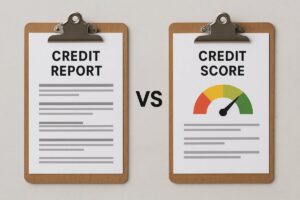
What affects your credit score the most is one of the most common questions among adults who actively monitor their credit or plan to apply for a card, loan or financing. Your credit score is not random, and it is not based on income, savings or personal preferences.
Understanding what affects your credit score the most allows you to focus your effort where it truly matters. Instead of guessing or reacting to myths, you can prioritize actions that deliver real improvement. Both FICO and VantageScore models rely on the same core elements, even though they weigh them slightly differently.
The five main factors that affect your credit score
Credit scores are built around five fundamental pillars. These factors appear directly in your credit report and are continuously updated as your financial behavior changes. In the FICO model, which is the most widely used by lenders, each factor has an approximate weight that reflects its relative importance in predicting future behavior.
| Factor | Approximate weight in FICO | Why it matters |
| Payment history | 35% | Shows if you pay obligations on time |
| Credit utilization | 30% | Measures how much of your available credit you use |
| Length of credit history | 15% | Reflects experience and stability |
| New credit and inquiries | 10% | Signals recent borrowing behavior |
| Credit mix | 10% | Shows variety in credit management |
These five elements together explain what affects your credit score the most in practice. Improving your score is not about optimizing every metric at the same time, but about prioritizing the factors with the greatest impact and maintaining consistent behavior over time.
Payment history: the biggest factor
Payment history is the single most important factor affecting your credit score, representing about 35 percent of your FICO score. It tells lenders whether you consistently meet your financial obligations as agreed.
Every on time payment strengthens your credit profile. Late payments, missed payments, collections and charge offs weaken it. Even a single payment reported as 30 days late can cause a significant drop, especially for people with limited credit history.
Payment history includes all reported credit obligations, such as credit cards, auto loans, student loans, personal loans and mortgages. Missed payments remain on your credit report for up to seven years, although their impact gradually decreases if no new negative events occur.
A common mistake is believing that partial payments or minimum payments always protect your score. Minimum payments only help if they are made before the due date. Paying late, even by a few days, can still be reported to credit bureaus.
To improve this factor, consistency matters more than perfection. Setting up automatic payments for at least the minimum due amount reduces the risk of accidental late payments. Over time, a long record of on time payments becomes the strongest foundation for a high credit score.
Credit utilization: why keeping balances low matters
Credit utilization measures how much of your available revolving credit you are currently using. This factor represents about 30 percent of your FICO score and is second only to payment history in importance.
Utilization is calculated by dividing your current balance by your total credit limit. For example, if you have a card with a 10,000 dollar limit and a 3,000 dollar balance, your utilization is 30 percent. Lower utilization generally signals lower risk to lenders.
High utilization can hurt your score even if you always pay on time. Consistently using a large portion of your available credit suggests dependence on borrowing, which increases perceived risk. This is why many people see their score drop after periods of heavy spending, even without missed payments.
Utilization appears clearly in your credit report as balances and limits for each account. Both individual card utilization and overall utilization across all cards are considered in scoring models.
Practical strategies to manage utilization include:
- Paying balances before the statement closing date, not just before the due date
- Requesting credit limit increases without increasing spending
- Distributing balances across multiple cards instead of maxing out a single one
- Using credit cards primarily for expenses already planned in your budget
This factor is closely tied to financial organization. Learning how to create a monthly budget helps control spending patterns and keeps utilization consistently low, which protects your score month after month.
Length of credit history: why time is your friend
The length of your credit history accounts for about 15 percent of your credit score. It reflects how long you have been using credit and how stable your borrowing behavior has been over time.
This factor includes the age of your oldest account, the age of your newest account and the average age of all your accounts. Older, well maintained accounts strengthen your profile because they provide long term evidence of responsible credit use.
Closing old accounts can unintentionally hurt this factor, especially if they are among your oldest credit lines. Even accounts that are rarely used contribute positively by increasing average age and available credit.
In your credit report, this information appears as account open dates.
There is no shortcut to improving this factor. Time and patience are essential, and the best strategy is simply to keep accounts in good standing.
New credit and hard inquiries
New credit activity represents about 10 percent of your FICO score. It includes newly opened accounts and hard inquiries generated when you apply for credit.
Hard inquiries occur when a lender checks your credit as part of a formal application. A few inquiries are normal, but many within a short period can signal financial stress or aggressive borrowing behavior.
Each hard inquiry usually causes a small and temporary drop in your score. Multiple inquiries for the same type of loan within a short window are often grouped together, which reduces the impact when rate shopping for auto loans or mortgages.
New accounts can also lower the average age of your credit file, which may amplify the effect. Being selective about when you apply for credit helps keep this factor under control.
Credit mix: do you really need different accounts?
Credit mix accounts for about 10 percent of your credit score. It refers to the variety of credit types you manage, such as credit cards, installment loans and mortgages.
Lenders like to see that you can handle different credit structures. Revolving credit works differently from installment loans, and managing both responsibly demonstrates flexibility.
However, credit mix alone should never be the reason to open a new account. Its impact is relatively small compared to payment history and utilization. If you already have at least one credit card and one installment loan, your mix is usually sufficient.
Common myths about what affects your score
There are many misconceptions about what affects your credit score the most, and these myths often lead people to focus on the wrong actions.
The following do not affect your credit score:
- Checking your own credit report or credit score
- Your income level or job title
- Your savings or investment balances
- Marital status or age
- Paying rent, unless it is reported through a specific credit reporting program
Another common myth is that carrying a balance improves your score. It does not. Paying in full while keeping utilization low is far more effective and healthier for your finances.
Final thoughts
Improving your credit score starts with clarity. Once you truly understand what affects your credit score the most, you can stop reacting emotionally to fluctuations and start acting strategically.
Payment history and credit utilization should always come first, followed by patience with credit age and discipline with new applications. Credit scoring models reward consistency, not perfection. Small, repeated habits applied over time lead to meaningful and lasting improvement, giving you more access, better rates and greater financial flexibility.
👇 Also read: