
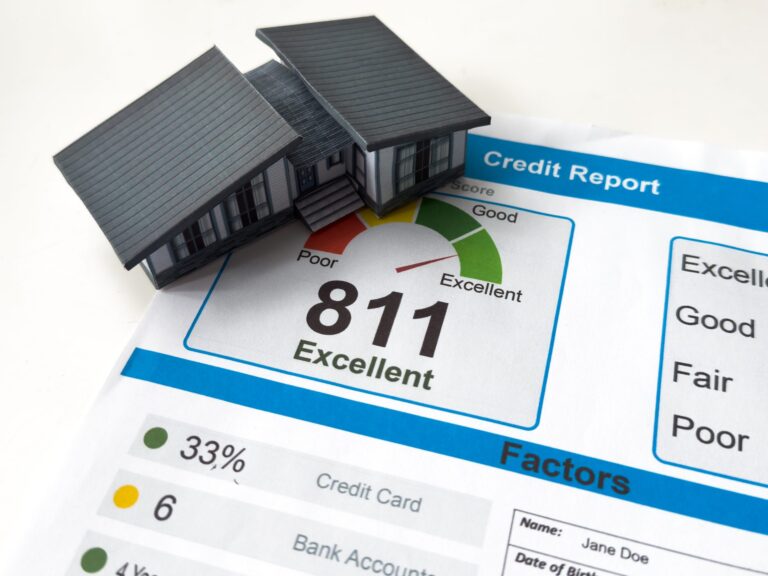
Buying a home is one of the biggest financial goals for many families in the United States. But before qualifying for a mortgage, one key question arises: what is a good credit score to buy a house? The answer depends on the type of loan you choose and the requirements of each lender.
Your credit score is one of the most important factors in mortgage approval. It shows lenders how reliable you are as a borrower and how likely you are to make on-time payments. The higher your score, the better your chances of securing lower interest rates, smaller down payments, and more favorable loan terms that make homeownership more affordable.
What Is a Credit Score and Why Does It Matter?
A credit score is a numerical representation of your credit history and financial behavior. It’s calculated using factors such as payment history, credit utilization, length of credit history, and account mix. Lenders use this score to estimate how likely you are to repay borrowed money responsibly.
In the U.S., the two most common scoring models are FICO Score and VantageScore. While they follow similar scales, each weighs credit factors differently. These models are trusted by banks and credit institutions to determine your creditworthiness and the interest rates you may qualify for.
FICO Score
The FICO Score, developed by the Fair Isaac Corporation, remains the most widely used credit scoring system in the United States. It evaluates five main categories: payment history (35%), amounts owed (30%), length of credit history (15%), new credit (10%), and credit mix (10%). Scores range from 300 to 850, with anything above 670 considered good.
Borrowers with higher FICO Scores are rewarded with lower mortgage rates, better terms, and faster approvals. This score is seen as the industry standard, serving as a benchmark for nearly all major mortgage programs nationwide. Maintaining a strong FICO Score demonstrates long-term financial discipline and responsibility.
VantageScore
The VantageScore, created by Experian, Equifax, and TransUnion, was designed to give consumers a fairer chance at establishing credit. It also uses a range of 300 to 850, but can generate a score for individuals with limited credit history faster than the FICO model. This makes it particularly useful for young buyers or recent immigrants.
Unlike FICO, VantageScore puts greater emphasis on recent payment behavior and updates credit data more frequently. It’s accepted by most lenders and online financial platforms, helping borrowers who are still building a strong credit foundation show progress more quickly.
Credit Score Ranges and What They Mean
Before applying for a mortgage, it’s essential to understand where your credit score stands. Knowing your category helps you plan realistically, identify which mortgage programs you qualify for, and anticipate how your score will affect both interest rates and down payment requirements. Most lenders classify scores into five categories, each representing a level of financial reliability:
| Credit Score Range | Category | What It Means |
|---|---|---|
| 300 – 579 | Poor | Frequent late payments or delinquent accounts. High lending risk. |
| 580 – 669 | Fair | Average borrower. May qualify with stricter terms or higher rates. |
| 670 – 739 | Good | Reliable borrower. Generally approved with reasonable interest rates. |
| 740 – 799 | Very Good | Excellent payment history. Likely to receive competitive rates. |
| 800 – 850 | Excellent | Exceptional credit profile. Qualifies for the best available mortgage terms. |
Understanding these ranges is key to identifying what is a good credit score to buy a house, since every mortgage type sets its own minimum threshold.
Minimum Credit Score Requirements by Loan Type
Mortgage programs in the United States vary widely depending on the borrower’s background, income level, and property type. Each loan program has unique credit score, income, and down payment requirements tailored to different financial profiles.
Knowing these thresholds helps you determine which mortgage best fits your situation. Some programs are designed for first-time buyers or moderate-income families, while others require stronger credit and higher financial reserves to qualify for better terms.
FHA Loan
The FHA loan, backed by the Federal Housing Administration, is one of the most accessible options for first-time homebuyers. It accepts scores as low as 580, allowing a 3.5% down payment. Some lenders even approve applications with scores between 500 and 579, though they usually require a 10% down payment to offset risk.
Conventional Loan
A conventional loan is the most common mortgage type offered by private lenders. It requires a minimum score of 620, but most approvals occur with scores above 700, considered the sweet spot for favorable terms. With a higher score, borrowers can access lower rates, reduced PMI costs, and more flexible financing options.
VA Loan
Available exclusively to active-duty military members and veterans, the VA loan does not have an official minimum score requirement. However, most lenders prefer applicants with scores around 620 or higher. This program is known for its no down payment and no private mortgage insurance (PMI) benefits, making it one of the most affordable paths to homeownership.
USDA Loan
The USDA loan, designed for rural and suburban homebuyers, typically requires a credit score between 640 and 660. Borrowers with slightly lower scores may still qualify if they demonstrate strong payment history and financial stability. This loan often comes with zero down payment and competitive fixed interest rates.
| Loan Type | Minimum Score | Minimum Down Payment | Ideal Borrower |
|---|---|---|---|
| FHA Loan | 580 (or 500 with conditions) | 3.5% | Moderate income, first-time buyers |
| Conventional Loan | 620 | 5% or more | Buyers with solid credit history |
| VA Loan | 620 (recommended) | 0% | Military members and veterans |
| USDA Loan | 640 – 660 | 0% | Rural or low-income families |
How Your Score Affects Interest Rates and Down Payments
A strong credit score influences not only your mortgage approval but also the total cost of your loan over time. Even small score variations can change your monthly payment and the overall interest paid across the loan’s lifespan, affecting long-term affordability.
For example, a borrower with a 760 score may qualify for an interest rate that’s 0.5% lower than someone with a 650. On a $300,000 mortgage, that difference can lead to over $25,000 in savings over 30 years. Clearly, maintaining a high credit score can have a lasting financial impact.
Furthermore, borrowers with lower scores often face larger down payments or stricter loan conditions. Lenders use this as protection against potential default. Understanding what is a good credit score to buy a house allows you to prepare financially, lower your costs, and negotiate more favorable loan terms.
How to Raise Your Credit Score Before Buying a Home
Raising your credit score takes time, but consistent financial habits can bring noticeable improvements within a few months. The most effective step is to pay every bill on time, as payment history makes up the largest portion of your credit score.
Another important move is to reduce your credit utilization ratio, keeping balances under 30% of your available credit limit. This signals responsible borrowing and lowers perceived risk. Avoid unnecessary new accounts, and keep older cards open to maintain a stable and lengthy credit history.
Lastly, make sure to monitor your credit reports regularly. Mistakes and outdated information can lower your score unfairly. By disputing errors with Experian, Equifax, or TransUnion, you can correct issues quickly. With discipline and patience, it’s possible to increase your score by up to 100 points in six months, significantly improving your mortgage eligibility.
Other Factors Lenders Consider Besides Your Score
While your credit score is crucial, lenders also look at the bigger financial picture to assess overall stability. They review your income verification, employment consistency, and Debt-to-Income Ratio (DTI) — the percentage of your monthly income used to pay debts. A lower DTI means better approval odds and more favorable loan offers.
Lenders also evaluate your recent credit activity. Even borrowers with high scores can be flagged if they’ve recently taken on too much debt, missed payments, or applied for multiple new credit lines. The size of your down payment and the type of property you’re purchasing also influence decisions, as they indicate your level of commitment and financial readiness.
In short, a high credit score boosts your approval chances, but it’s not the only factor that matters. Consistent income, low debt, and strong financial habits are equally important in proving you’re a trustworthy borrower.
Conclusion
Understanding what is a good credit score to buy a house goes beyond memorizing numbers — it’s about recognizing how lenders evaluate financial reliability. Scores above 700 typically unlock the best mortgage terms, but accessible programs exist for those still building or improving their credit.
By planning ahead, paying off debt, and maintaining consistent payment habits, you make homeownership more attainable and financially stable. Buying a home isn’t just a financial decision — it’s an investment in security and long-term peace of mind, built on a strong credit foundation.
👇 Learn more:
How to get a personal loan with bad credit: Real options that work
The benefits and drawbacks of refinancing a mortgage loan in the United States