Microsoft perde R$ 124 bi em 1 dia mesmo com ganhos em dobro acima do esperado hoje


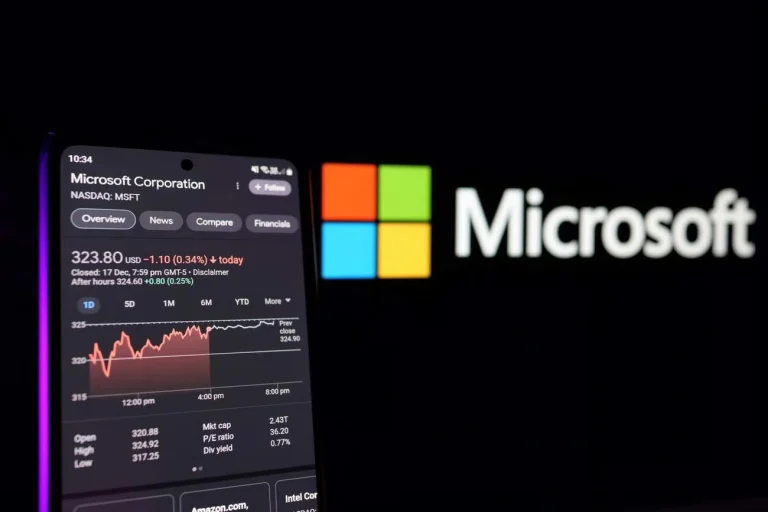
A Microsoft recorded significant losses in the stock market after disclosing quarterly results considered strong. On April 30, the company’s shares fell 3.93%, resulting in a market loss of approximately $124 billion, with the market capitalization reaching $3.029 trillion. The drop appears to be related to the increase in the company’s capital expenditures, especially in artificial intelligence, which led to a reduction in the free cash flow margin, from 29% to 19.1%, and a decrease in gross margins, which reached 67.6%, the lowest percentage since 2022. Despite this, the company presented a solid financial performance, with earnings per share of $4.27, above the expected $4.06, and revenue of $82.89 billion, superior to the predicted $81.39 billion.
This scenario occurs in an economic context marked by concerns with inflation and interest rates. With inflation still persistent in several parts of the world, companies are being forced to increase their capital expenditures to maintain competitiveness, especially in areas such as artificial intelligence. Microsoft is no exception, investing heavily in its cloud division, Azure, which is seen as one of the company’s main growth levers. The expectation of 39% to 40% growth in the fourth quarter for Azure is a positive indicator, but may have been overshadowed by concerns about capital expenditures. The cash flow management capacity is crucial in this context, as it directly influences investors’ perception of the company’s financial health.
The numbers presented by Microsoft reveal a mixed picture. On the one hand, the company managed to exceed expectations in terms of revenue and earnings per share, which is a sign of resilience in a challenging economic environment. On the other hand, the increase in capital expenditures and the consequent reduction in the free cash flow margin may have triggered the negative market reaction. The current monetary policy, with higher interest rates in many countries, makes capital more expensive for companies, which can further pressure the perception of investments in technology. Artificial intelligence is a strategic area for Microsoft, but it requires significant investments, which may explain investors’ caution.
In perspective, the market reaction to the disclosure of Microsoft’s results reflects broader concerns about how companies can balance investments in technology with the need to maintain a robust financial health. The company seems to face common challenges to many players in the sector, but its overall performance is still solid, with indicators that suggest growth potential, especially in areas such as cloud and artificial intelligence. The continuity of investments in technology may be crucial for long-term competitiveness, even if it means short-term volatility.