
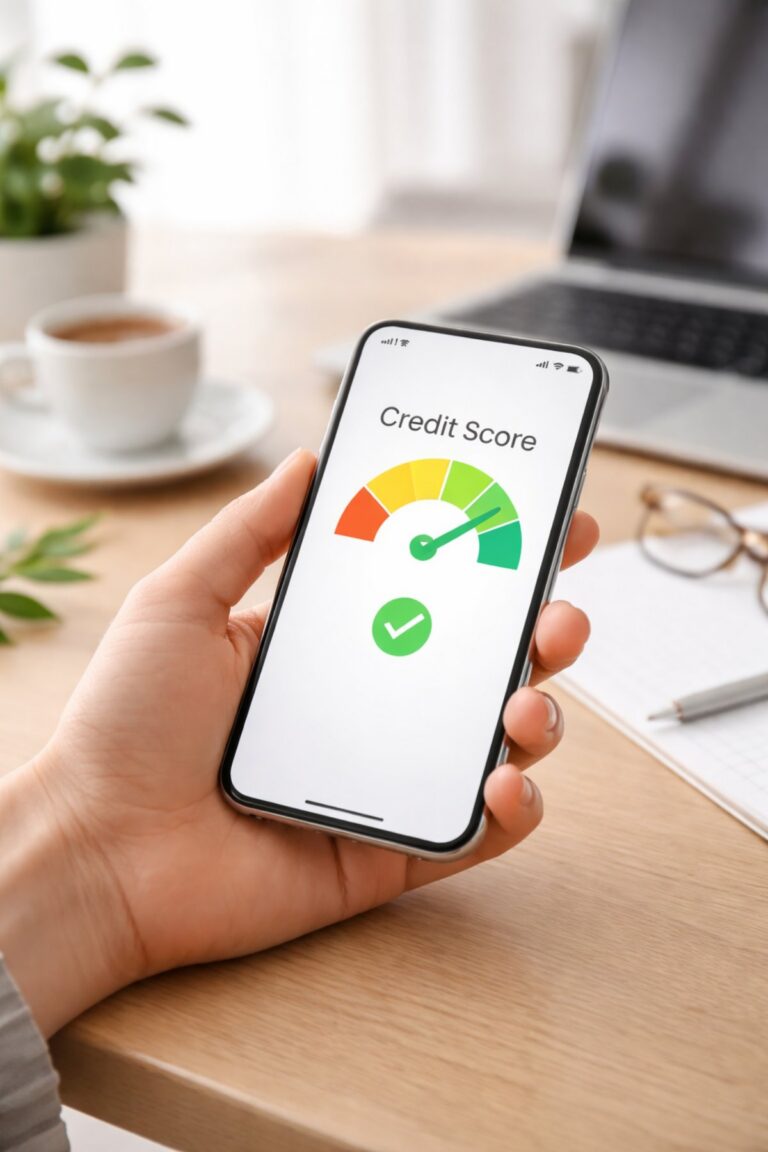
Many people avoid checking their credit score because they believe it could harm their financial profile. This concern is common, especially among those who are still learning how credit systems work and how lenders evaluate risk.
So let’s answer the question clearly: does checking your credit score lower it? No, it does not.
Checking your own credit score is completely safe, does not affect your score, and is actually a recommended habit for maintaining good financial health.
Does checking your credit score lower it?
The belief that checking your credit score lowers it is a widespread myth. When you check your score through platforms like Experian, Credit Karma, or your bank, the system records it as a soft inquiry, which has no impact on your credit score.
This means your score does not decrease, lenders cannot see these checks, and your profile remains unchanged. So, if you are wondering whether checking your credit score lowers it, the answer is simple: it does not.
What is a credit score and how FICO works
A credit score is a number that represents your financial behavior and helps lenders assess your risk. The most widely used model is the FICO Score, which ranges from 300 to 850.
FICO calculates your score based on five main factors:
- Payment history (35%)
- Credit utilization (30%)
- Length of credit history (15%)
- Credit mix (10%)
- New credit inquiries (10%)
Checking your own credit score is not part of these factors, which is why it does not affect your score.
FICO credit score ranges
- Poor (300–579)
- Fair (580–669)
- Good (670–739)
- Very Good (740–799)
- Excellent (800–850)
What your score means in practice
| Score Range | Approval Chances | Interest Rates | Credit Limits |
|---|---|---|---|
| 300–579 | Very Low | Very High | Limited |
| 580–669 | Moderate | High | Limited |
| 670–739 | High | Competitive | Good |
| 740–799 | Very High | Low | Higher |
| 800–850 | Highest | Lowest | Premium |
These ranges show how your score affects approvals, costs, and access to credit.
Soft inquiry vs hard inquiry
Understanding inquiry types is key to answering whether checking your credit score lowers it.
A soft inquiry occurs when you check your own score or use monitoring tools. It does not affect your score and is not visible to lenders.
A hard inquiry happens when you apply for credit, such as a loan or credit card. This can slightly lower your score, especially if multiple applications occur in a short period.
| Type | Affects Score? | Visible to Lenders? | Impact |
|---|---|---|---|
| Soft inquiry | No | No | None |
| Hard inquiry | Yes | Yes | Low and temporary |
This makes it clear that checking your own credit score does not lower it because it is always a soft inquiry.
When your credit score can change
Your credit score may change when hard inquiries are involved. A single application usually causes a small drop of a few points, while multiple applications can have a greater impact.
The real risk comes from frequent credit applications, not from checking your score.
How often should you check your credit score?
There is no limit to how often you can check your credit score. Doing so will never harm your profile.
Regular monitoring helps you track progress, detect errors, and prevent fraud. Whether you check weekly or monthly, the answer remains the same: checking your credit score does not lower it.
Final answer: does checking your credit score lower it?
No, checking your credit score does not lower it.
It is a safe action that helps you stay informed and make better financial decisions. Instead of avoiding your score, you should monitor it regularly and use that information to improve your financial profile over time.
👉Read also: Credit Score Ranges Explained: What They Really Mean for You