
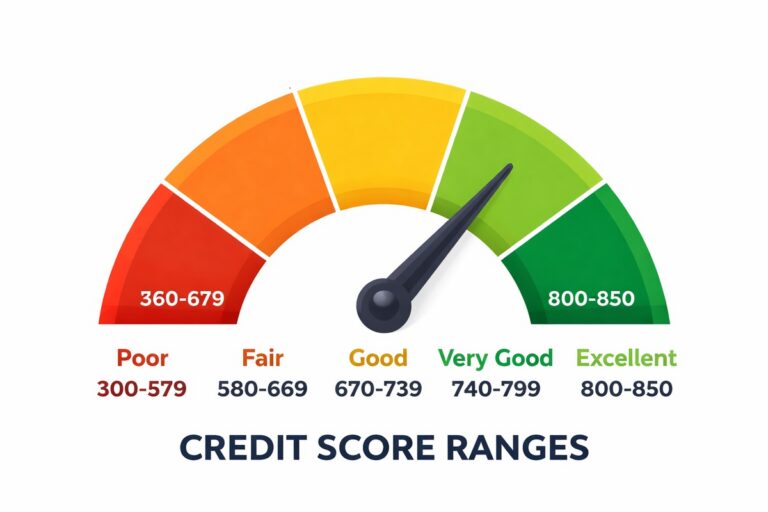
Credit score ranges explained in a deeper and more practical way can help you understand not just your number, but what it truly means for your financial life and opportunities.
Many people check their credit score frequently but still don’t fully understand whether their score is actually good, bad, or competitive in the market. That’s exactly why understanding credit score ranges explained is essential — because lenders don’t just look at your number, they look at your category.
What Is a Credit Score (and Why FICO Matters)
A credit score is a numerical representation of your financial behavior. It reflects how well you manage credit, based on factors like:
- Payment history
- Credit utilization
- Length of credit history
- Credit mix
- New credit inquiries
The most widely used model is the FICO Score, created by the Fair Isaac Corporation.
The FICO Score ranges from 300 to 850, and it plays a major role in lending decisions. When we talk about credit score ranges explained, we are most often referring to how your FICO score is categorized.
Lenders rely heavily on FICO because it provides a standardized way to measure risk. The higher your score, the lower the perceived risk.
Credit Score Ranges Explained (FICO)
Understanding the official FICO ranges is essential if you want a real interpretation of your score.
FICO Credit Score Ranges
- Poor (300–579)
- Fair (580–669)
- Good (670–739)
- Very Good (740–799)
- Excellent (800–850)
These categories are the foundation of credit score ranges explained, and they directly influence your financial opportunities.
What Each Credit Score Range Means in Practice
Below is a more detailed breakdown of how each range impacts your financial life:
| Score Range | Category | Approval Chances | Interest Rates | Credit Limits |
|---|---|---|---|---|
| 300–579 | Poor | Very Low | Very High | Very Limited |
| 580–669 | Fair | Moderate | High | Limited |
| 670–739 | Good | High | Average/Competitive | Good |
| 740–799 | Very Good | Very High | Low | Higher |
| 800–850 | Excellent | Highest | Lowest | Premium / Maximum |
This table makes credit score ranges explained much more practical: it shows exactly how your category affects approvals, costs, and access to credit.
FICO vs VantageScore: What’s the Difference?
Another important part of credit score ranges explained is understanding that not all scoring models are the same.
FICO Score
- Most widely used by lenders
- Used in mortgages, auto loans, and credit cards
- More consistent across financial institutions
VantageScore
- Created by the three major credit bureaus
- Uses a similar 300–850 range
- May weigh factors slightly differently
While both models matter, FICO remains the industry standard. That’s why most discussions around credit score ranges explained focus on FICO ranges.
How Lenders Use Credit Score Ranges
Lenders don’t just evaluate your exact number — they use credit score ranges explained as a shortcut to decision-making.
Based on your range, they determine:
- Whether to approve or deny your application
- What interest rate to offer
- Your credit limit
- Which financial products you qualify for
For example:
- Someone in the Fair range might get approved but pay significantly higher interest
- Someone in the Very Good or Excellent range will typically receive better rates and higher limits
This is why understanding credit score ranges explained is crucial for financial planning.
Why Credit Score Ranges Matter More Than the Score Itself
A key insight often overlooked is that your range matters more than small score changes.
For example:
- Moving from 650 to 665 (same range) → little to no impact
- Moving from 669 to 670 (new range) → major improvement in offers
This is one of the most important takeaways from credit score ranges explained:
progress between ranges creates real financial benefits.
How to Move Into a Better Credit Score Range
Improving your position within credit score ranges explained requires consistency over time.
Here are the most effective strategies:
- Pay all bills on time (your most important factor)
- Keep credit utilization below 30% (ideally under 10%)
- Avoid multiple hard inquiries in a short period
- Maintain older accounts to build credit history
- Diversify your credit types when possible
These habits strengthen your profile and help you move into higher ranges.
Common Misconceptions About Credit Score Ranges
Many people misunderstand how credit score ranges explained actually work.
Myth 1: You need a perfect score
Reality: Scores above 740 already unlock excellent opportunities
Myth 2: Small increases always help
Reality: Only moving between ranges creates meaningful change
Myth 3: More credit is bad
Reality: Responsible credit usage actually improves your score
Final Thoughts
Understanding credit score ranges explained gives you a much clearer and more strategic view of your financial life.
Your score is just a number — but your range defines your opportunities.
By focusing on improving your position within these ranges, you can:
- Access better financial products
- Secure lower interest rates
- Increase your credit limits
- Gain more flexibility and control
With discipline and the right habits, moving into a higher range isn’t just possible — it’s expected over time.
👉Read also: Best savings account for beginners: Simple options to start saving